

⏱️ The Metabolic Health Series — Part V: Intermittent Fasting

Updated: Jun 2
Why when you eat matters just as much as what you eat
Framing the Idea
Up to this point, we’ve focused on food:
What your body does with it
The quality of that food
The types of fats that support metabolism
But there’s another important factor:
👉 How often you eat
Because your body behaves very differently depending on whether you are:
In a fed state
Or in a fasted state
What Is Intermittent Fasting?

What Fasting Allows the Body to Do
When you create space between meals, your body can:
Use stored energy more efficiently
Stabilize blood sugar
Reduce reliance on constant food intake
Improve metabolic flexibility
How Keto and Fasting Work Together

Keto and intermittent fasting naturally support each other.
When you are adapted to burning fat:
Fasting becomes easier
Hunger becomes more stable
Energy remains steady
👉 This is why many people on keto naturally begin eating less often—without forcing it.
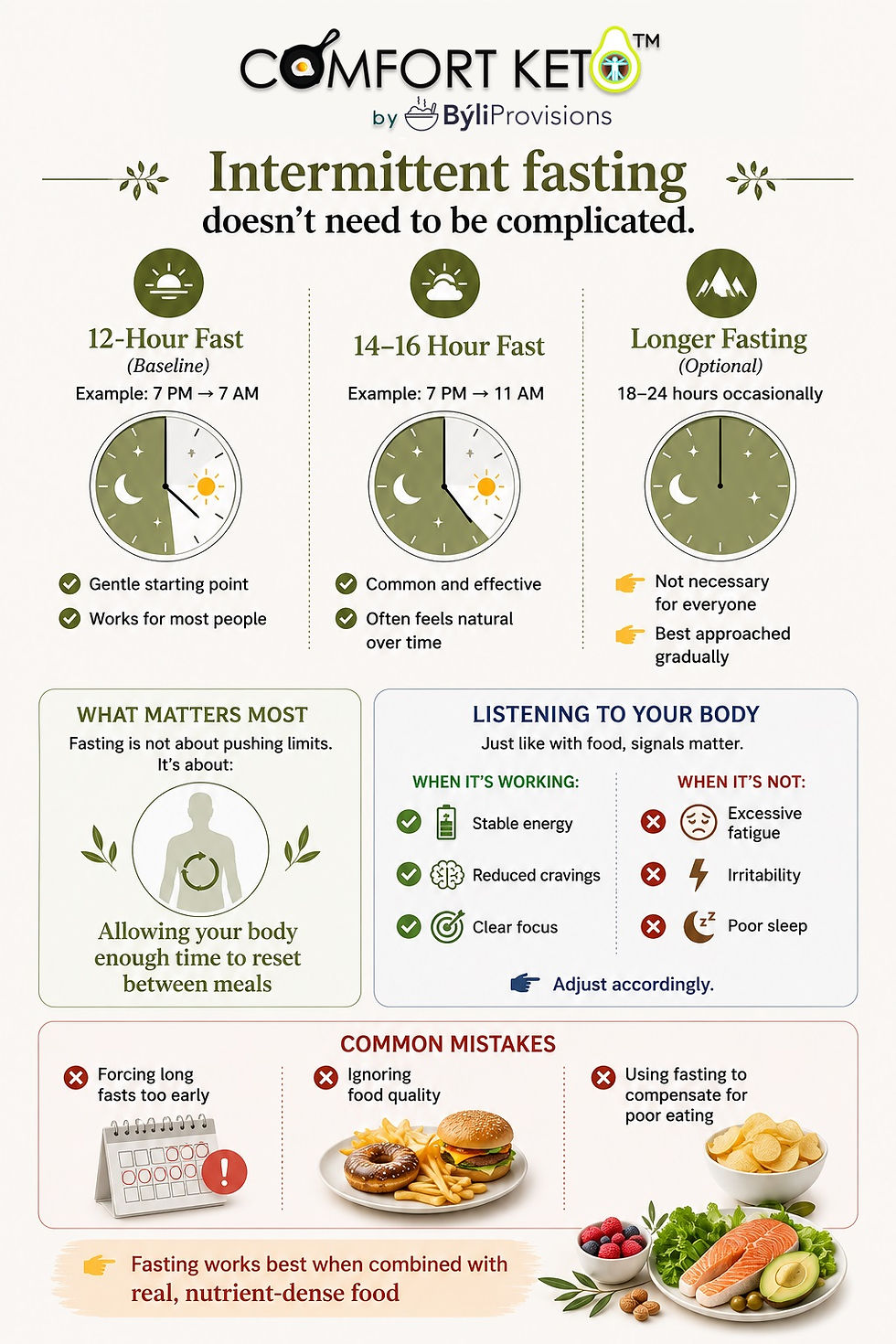
Simple Ways to Start
Chef Janine Perspective
Fasting is not:
A punishment
A trend
A rigid schedule
It is:
👉 A natural rhythm your body already understands
When you stop eating constantly:
Hunger becomes more predictable
Energy becomes more stable
Eating becomes more intentional
The Key Takeaway
👉 It’s not just what you eat—it’s how often you eat that shapes your metabolism.
Bringing It All Together
At this point, the full picture is coming into focus:
Your body responds to how food is structured
Quality matters more than labels
Fat selection matters
Timing matters
Final Thought
Health is not built on:
Constant eating
Strict rules
Short-term fixes
It is built on:
👉 Working with your body’s natural rhythms
What Comes Next
Now that we’ve covered:
How the body works
What to eat
How to eat
When to eat
The final piece is:
👉 What kind of protein best supports your body
👉 Part VI — Choosing the Right Proteins
The Metabolic Health Series Overview


Comments