top of page

🥩 The Metabolic Health Series — Part VI: Protein Quality

  • Writer: ketogenicfasting
    ketogenicfasting
  • Mar 27
  • 3 min read

Choosing the right proteins—and why it matters more than you think


Framing the Idea


Protein is often reduced to numbers:

  • Grams per day

  • Macros

  • Ratios


But that misses something essential:

👉 Not all protein is the same.


Because your body doesn’t just respond to how much protein you eat—

👉 It responds to what that protein is, and how much of it your body can actually use.


Why Protein Quality Matters
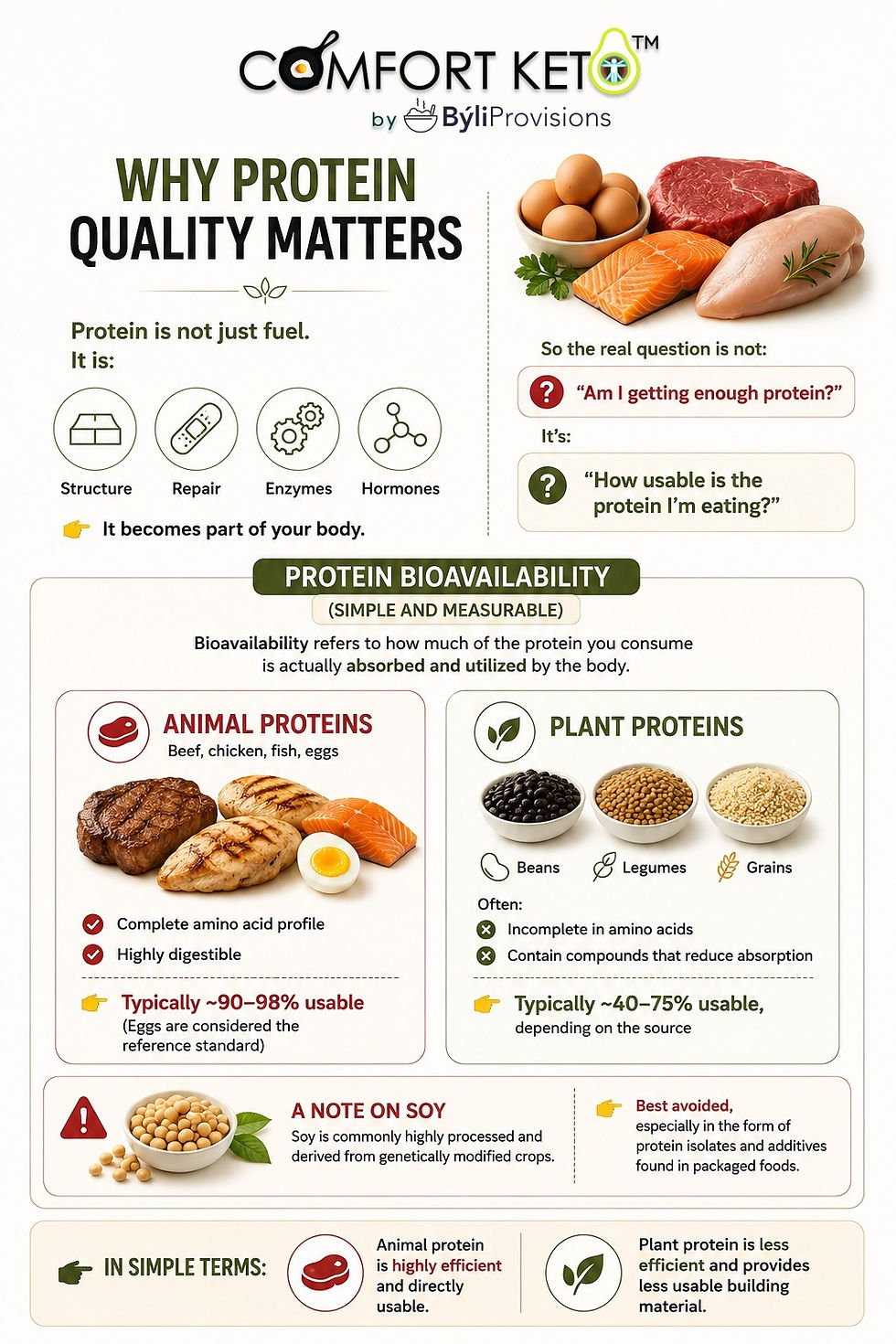

Protein is not just fuel.

It is:

  • Structure

  • Repair

  • Enzymes

  • Hormones

👉 It becomes part of your body.


So the real question is not:

👉 “Am I getting enough protein?”


It’s:

👉 “How usable is the protein I’m eating?”


Protein Bioavailability (Simple and Measurable)


Bioavailability refers to how much of the protein you consume is actually absorbed and utilized by the body.


🥩 Animal Proteins

  • Beef, chicken, fish, eggs

  • Complete amino acid profile

  • Highly digestible

👉 Typically ~90–98% usable(Eggs are considered the reference standard)


🌱 Plant Proteins

  • Beans

  • Legumes

  • Grains


Often:

  • Incomplete in amino acids

  • Contain compounds that reduce absorption

👉 Typically ~40–75% usable, depending on the source


⚠️ A Note on Soy

Soy is commonly highly processed and derived from genetically modified crops.

👉 Best avoided, especially in the form of protein isolates and additives found in packaged foods.


👉 In simple terms: Animal protein is highly efficient and directly usable. Plant protein is less efficient and provides less usable building material.


Foundational Proteins (Build Your Meals Around These)


🥩 Beef

  • Nutrient-dense

  • Rich in iron and B vitamins

  • Highly satisfying

👉 One of the most complete and reliable protein sources.


🍗 Chicken

  • Clean and versatile

  • Easily digestible

👉 A dependable, everyday protein.


🐟 Fatty Fish

  • Salmon

  • Mackerel

  • Sardines

Provide:

  • High-quality protein

  • Beneficial fats

  • Strong nutritional balance

👉 Among the most well-rounded protein sources.


🥩 Liver (Nutrient-Dense Organ Meat)

  • Extremely rich in vitamins and minerals

  • One of the most nutrient-dense foods available

  • Highly bioavailable

👉 In nature, predators consume the liver first—because it is the most nutrient-rich part of the animal.

✔ Best approach:

  • Small amounts

  • About once a month

👉 A little goes a long way.


⚖️ Supporting Proteins (Use as Part of Variety)


🐟 Tuna (Including Tuna Steak)

  • High-quality, complete protein

  • Lean and clean

  • Typically wild-caught

✔ Excellent protein source

👉 Because tuna is naturally lean, it is best served with complementary elements that bring balance and richness.


👩‍🍳 Practical Pairing

  • Avocado oil mayonnaise

  • Homemade tartar sauce (with sour cream)

  • Cream-based sauces

  • Olive oil–based dressings

👉 Enhances flavor, texture, and satiety

👉 “Tuna is a clean, lean protein—best served with a proper sauce to bring balance and richness to the plate.”


🥚 Eggs

  • Highly bioavailable

  • Nutrient-rich

  • Extremely versatile

👉 A strong supporting protein in any meal.


⚠️ Use with Awareness

🐖 Pork

  • Variable in quality

  • Requires proper preparation

👉 Pork must be thoroughly cooked due to the potential presence of parasites if undercooked.

✔ Best when:

  • Well-cooked

  • Properly sourced


🦐 Shellfish

  • Shrimp

  • Lobster

👉 Best enjoyed occasionally as part of variety.


What This Is Really About


This is not about restriction.

It’s about:

👉 Choosing protein your body can efficiently use and benefit from.


Protein and Satiety


High-quality, highly usable protein:

  • Reduces hunger

  • Supports muscle maintenance

  • Stabilizes energy

👉 This is why real-food meals feel complete.


What a Proper Meal Looks Like


A well-composed meal includes:

  • A solid protein source

  • Quality fats

  • Low-carb vegetables

👉 Protein is a centerpiece, not a side.


Common Mistakes


  • Treating all protein sources as equal

  • Relying on processed meats

  • Ignoring bioavailability


Chef Janine Perspective


Protein should not be:

  • Highly processed

  • Artificially engineered

  • Reduced to powders and substitutes


It should be:

  • Recognizable

  • Whole

  • Properly prepared


Because protein is not just fuel—

👉 It becomes you.


The Key Takeaway


👉 The quality—and usability—of your protein matters just as much as the amount.


Bringing It All Together


At this point, the framework is complete:

  • How your body works

  • Real vs fake food

  • How to think about nutrition

  • Fat quality

  • Meal timing

  • Protein quality


Final Thought


Health is built from:

  • What you eat

  • When you eat

  • And how well your body can use it

👉 Every input becomes part of your body.


What Comes Next


There is still one piece that often gets overlooked:

👉 Sweetness


Even without sugar, certain ingredients can still affect cravings, habits, and metabolic signals.

👉 Part VII — Artificial Sweeteners


The Metabolic Health Series Overview

Comments


bottom of page