

The Art of Mackerel: Mediterranean Flames, French Elegance & Asian Comfort

Mackerel is one of Chef Janine’s favorite fish choices because it delivers extraordinary flavor, remarkable nutritional value, and exceptional culinary versatility all in one beautifully rich package. Naturally abundant in omega-3 fatty acids, vitamin D, selenium, high-quality protein, and essential minerals, mackerel supports brain function, cardiovascular wellness, metabolic health, satiety, and overall vitality — making it especially aligned with low-carb and ketogenic lifestyles.
Unlike many lean white fish that can dry out easily during cooking, mackerel’s naturally rich oils allow it to remain succulent and deeply flavorful whether grilled, roasted, pan-seared, smoked, or gently baked. Its bold character pairs beautifully with Mediterranean herbs, Asian aromatics, French coastal sauces, citrus accents, charred vegetables, and vibrant acidic accompaniments.

Chef Janine particularly appreciates how mackerel transforms simple ingredients into deeply satisfying, Michelin-Star restaurant-quality dishes while remaining one of the ocean’s most nourishing and underrated seafood treasures.

Mackerel: A Striking & Powerful Seafood
Mackerel is a saltwater fish from the same family as tuna (Scombridae), though it often remains overlooked despite its remarkable qualities. With dark pink flesh, a blue-black tiger-striped back, and a shimmering silver belly, it is as visually beautiful as it is flavorful.
Most mackerel is wild-caught, contributing to both its nutritional integrity and its appeal among seafood enthusiasts seeking minimally processed, naturally harvested fish.
Top Varieties
Atlantic (Boston) Mackerel
King Mackerel
Spanish Mackerel
A serving size is approximately 3 ounces cooked, or about ¾ cup of flaked fish.
Fatty fish such as anchovies, herring, mackerel, black cod, salmon, sardines, bluefin tuna, whitefish, striped bass, and cobia are particularly valued for their high omega-3 fatty acid content.
As an oily fish, mackerel contains one of the highest concentrations of omega-3 fatty acids among both fresh and saltwater fish. These beneficial fats help support healthy blood pressure, improve HDL (“good”) cholesterol, and contribute to overall cardiovascular and neurological wellness.
🌍 Eco-Friendly & Fast-Growing
Mackerel reaches breeding maturity in only 2–4 years and is commonly harvested using environmentally responsible fishing methods that minimize damage to ocean ecosystems and sea floors.
It is frequently rated among the best sustainable seafood choices by environmental organizations due to its healthy population levels and responsible harvesting practices.
Seasonality Highlights
Newfoundland: August–November
Nova Scotia: May–July
Chesapeake Bay (Spanish Mackerel): June–October
🐟 Flavor Profile: Bold & Beautiful
Mackerel is a richly flavored, meaty fish with a naturally oily texture that delivers deep savory character and remarkable satisfaction.
Its bold profile makes it ideal for robust culinary preparations that embrace acidity, herbs, smoke, citrus, aromatics, and fresh vegetable accompaniments.
🔥 Chef Janine's Favorite Cooking Methods:
Grilled Mediterranean Mackerel with Charred Vegetables
Throughout the coastal regions of Greece and Turkey, grilled mackerel has long been celebrated for its rich flavor, delicate texture, and remarkable versatility.
Prepared over open flames, the fish develops a beautifully crisped exterior while remaining tender and succulent within. Traditionally accompanied by charred vegetables such as zucchini, tomatoes, onions, and peppers, this preparation is finished with fresh lemon, olive oil, sea salt, and fragrant herbs that enhance the natural depth of the mackerel without overpowering it.

The result is a vibrant and deeply satisfying Mediterranean dining experience.
🧑🍳 Flavor Pairing Suggestions
Fresh lemon juice, garlic herb gremolata, smoky roasted pepper relish, lemony tahini sauce, sumac onions, parsley-olive oil dressing, or a light yogurt cucumber sauce pair beautifully with the richness of grilled mackerel.
Chinese-Style Baked Mackerel with Cauliflower Fried Rice & Baby Bok Choy
This refined Asian-inspired preparation highlights the savory richness of baked mackerel paired with aromatic cauliflower fried rice and tender baby bok choy.
The fish is gently roasted until perfectly flaky, allowing its naturally rich oils and flavor to shine. Beneath it, the cauliflower rice is infused with garlic, ginger, scallions, and subtle sesame-inspired aromatics, creating a lighter yet deeply flavorful alternative to traditional fried rice.
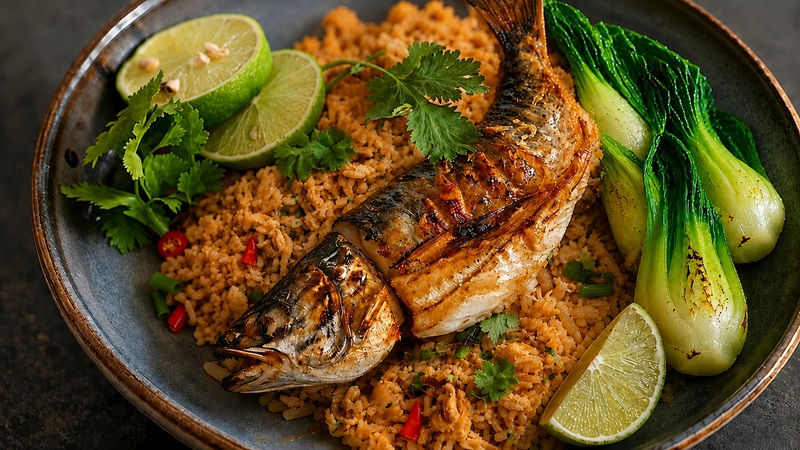
Lightly charred baby bok choy adds freshness, texture, and visual elegance to the presentation, resulting in a beautifully balanced low-carb meal.
🧑🍳 Flavor Pairing Suggestions
Fresh lime juice, ginger-scallion sauce, black vinegar drizzle, chili crisp oil, toasted sesame accents, pickled vegetables, garlic-soy reduction, or a delicate miso glaze complement the savory richness of the fish exceptionally well.
Butter Pan-Fried Mackerel Filet with Sauce Vierge
Inspired by the refined traditions of French coastal cuisine, butter pan-fried mackerel filet served with sauce vierge offers an elegant interpretation of this deeply flavorful fish.
The filet is carefully seared in butter until golden and delicately crisp on the outside while remaining moist and tender within. It is then finished with a classic sauce vierge composed of fresh tomatoes, herbs, olive oil, citrus, and aromatic accents that bring brightness and sophistication to the plate.

The freshness and acidity of the sauce perfectly balance the buttery richness of the mackerel, creating a dish that is graceful, refined, and deeply satisfying.
🧑🍳 Flavor Pairing Suggestions
Lemon beurre blanc, caper herb vinaigrette, acidic tomato concassé, delicate fennel salad, champagne vinegar shallots, citrus herb emulsion, or fresh tarragon butter provide elegant balance and brightness alongside the richness of the fish.
🍷 Drink Pairing Suggestions
Preparation Style | Suggested Pairings | Why It Works |
Mediterranean Grilled Mackerel | Sparkling mineral water with lemon, dry Sauvignon Blanc, chilled Assyrtiko | Bright acidity and minerality balance the richness |
Chinese-Style Baked Mackerel | Jasmine tea, chilled oolong tea, dry Riesling, sparkling yuzu water | Floral and citrus elements complement umami flavors |
French Mackerel with Sauce Vierge | Dry rosé, Picpoul de Pinet, sparkling citrus water | Crisp acidity enhances herbs and fresh tomato notes |
Smoked or Charred Mackerel | Unsweetened iced black tea, dry cider, sparkling mineral water | Cleanses the palate from smoky richness |
Spicy Preparations | Hibiscus tea, cucumber-lime agua fresca, off-dry Riesling | Cooling and refreshing against spice |
Escabeche or Vinegar-Based Mackerel | Sparkling lime water, dry vermouth, crisp white wines | Harmonizes with tangy acidic profiles |
Keto / Low-Carb Mackerel Meals | Electrolyte mineral water, herbal iced teas, dry sparkling wines | Refreshing without added sugars |
💪 Health Perks of Mackerel
🧠 Omega-3 Powerhouse
One fillet contains approximately 2,991 mg of omega-3 fatty acids (EPA & DHA).
Benefits include:
Heart health support
Brain function support
Lower blood pressure
Improved HDL (“good”) cholesterol
👩⚕️ Low Toxins, High Benefits
Compared to many larger seafood species, wild-caught mackerel generally contains:
Lower mercury levels
Fewer contaminants
No antibiotics when wild-caught
Mackerel = Glowing Skin
Rich in omega-3s, DHA, EPA, and selenium, mackerel helps nourish the skin from within by supporting:
Cell membrane health
Hormone production
Reduced inflammation
Collagen preservation
⚖️ Weight Loss Ally
A 100g serving provides approximately:
305 calories
25g healthy fats
High protein content
Its nutrient density and satiety make it an excellent choice for metabolic wellness and appetite control.
⚡ Electrolyte Support
Mackerel naturally provides magnesium and essential minerals that support:
Muscle function
Hydration balance
Nerve function
Blood pressure stability
🛡️ Immune Support
Selenium-rich foods like mackerel help support:
Thyroid function
Cellular defense systems
Antioxidant activity
Overall immune resilience
❤️ Heart & Cholesterol Support
Mackerel’s omega-3 fatty acids may help:
Reduce LDL cholesterol
Improve HDL cholesterol
Lower blood pressure
Support healthy circulation
🦴 Joint & Inflammation Support
EPA and DHA may help reduce inflammatory responses associated with joint discomfort and stiffness.
🔋 Natural Energy Support
Mackerel is exceptionally rich in vitamin B12, which supports:
Red blood cell production
DNA synthesis
Mental clarity
Sustained energy production
💥 Antioxidant Protection
The selenium and healthy fats found in mackerel help combat oxidative stress and support long-term cellular health.
🛒 Shopping Tips for Fresh Mackerel

🧐 How to Spot Fresh Fish
Bright blue skin
Clear, lively eyes
Rosy-red gills
Firm, springy flesh
Ask Smart Questions
“What came in fresh today?”
“Was this fish frozen at sea?”
Sometimes frozen-at-sea mackerel is actually fresher than display fish.
Frozen is Just as Good
Flash-freezing preserves the vast majority of nutrients, making high-quality frozen mackerel an excellent option.
🥫 Pro Pick: Best Canned Mackerel

🐟 Holy Mackerel: More Than an Expression — A Symbol of Nourishment & Abundance
For generations, the phrase “Holy Mackerel!” has been used as a colorful expression of surprise and amazement. Yet perhaps the saying carries a deeper meaning than most people realize.
Mackerel has long been one of the ocean’s great sustaining fish — extraordinarily abundant, fast-reproducing, nutrient-dense, and capable of nourishing massive populations across entire coastal civilizations. Unlike rare luxury seafood associated with wealth and exclusivity, mackerel became a fish of the people: feeding families, sustaining communities, and serving as one of the sea’s great renewable provisions throughout history.
Its immense shimmering schools and astonishing reproductive abundance made mackerel a living symbol of multiplication and provision. In many ways, it embodies the very idea of natural abundance itself.
Viewed through that lens, the pairing of the words “holy” and “mackerel” begins to feel far less accidental.
The miracle performed by Jesus in the feeding of the multitudes centered around multiplication, nourishment, compassion, and the provision of food for the people. While scripture does not identify the exact species of fish involved, the idea of extraordinarily abundant fish aligning with nourishment for vast numbers of people corresponds remarkably well with the historical role mackerel has played throughout human civilization.
For centuries, immense schools of mackerel have nourished populations across the world, making it one of the ocean’s great sustaining gifts — a fitting symbol of abundance, provision, and nourishment for the masses.
Holy Mackerel might well have been the Jesus fish.
Final Thoughts
Mackerel deserves far more recognition than it often receives. Rich, flavorful, deeply nourishing, and remarkably versatile, it offers an extraordinary combination of culinary satisfaction and nutritional excellence. Whether prepared over open flames Mediterranean-style, baked with aromatic Asian flavors, or elegantly finished with classic French accompaniments, mackerel proves that healthy seafood can also be luxurious, comforting, and unforgettable.
Chef Janine encourages incorporating oily fish like mackerel into your meals regularly — not only to explore its bold and satisfying flavor, but also to support long-term wellness, vitality, and metabolic health through truly nourishing food.
🔁 Aim to enjoy oily fish like mackerel at least once every other week as part of a balanced, nutrient-rich lifestyle.
Visit www.comfortketo.com to check when this featured dish returns to the menu.
Bon Appétit!
Chef Janine.


Comments