

Chef Janine’s Gourmet Keto Salisbury Steak: A Rustic Indulgence

Updated: May 14
For those who crave the rich, homey flavors of a classic Salisbury steak but refuse to compromise on their keto lifestyle, Chef Janine presents a masterpiece of rustic cuisine. This isn’t your ordinary diner-style dish—it’s a gourmet reinvention, crafted with the finest grass-fed beef, bathed in a velvety, umami-rich mushroom gravy, and seared to perfection in heart-healthy fats. Every bite delivers the deep, caramelized flavor of a slow-simmered pan sauce, infused with fresh herbs and the perfect touch of smoky richness.
Served alongside buttery mashed cauliflower or charred garlic-kissed green beans, this Salisbury steak isn’t just a meal—it’s a moment of indulgence for those who appreciate the art of keto cooking. Whether you're gathering around the table with loved ones or treating yourself to a hearty, comforting dish, Chef Janine’s version will satisfy your soul while keeping you in ketosis.
The Origins of the Salisbury Steak
There's so much more to Salisbury steak than being a classic TV dinner from the 1950s. Salisbury steak is the ultimate vintage comfort food. Actually, Dr. James Henry Salisbury's original recipe is much older than you think. Dr. Salisbury introduced the minced beef dish mid-1800s during Civil War-era as a cure for stomach illnesses and digestive troubles. The recipe was widely believed to have helped fight disease in Civil War soldiers.

During the Civil War, soldiers who subsisted on military-issued biscuits, suffered from digestive illnesses like dysentery which killed more soldiers than battlefield combat. Dr. Salisbury's nutrient rich "muscle pulp of beef" helped combat such complications.
Dr. Salisbury experimented on extended periods beans and porridge consumption. His "eureka" moment came when he tested a singular diet of lean, minced beef which he determined to be the choice alimentation for easy human digestion. His "muscle pulp of beef" gave the Union Army soldiers sustenance, while also curing and preventing potentially lethal intestinal diseases. After the end of the Civil War, in 1888, Dr. Salisbury published his findings in his book "The Relation of Alimentation and Disease" which became one of the first American low-carb diets. At the beginning of the 20th century (1905), the Salisbury steak became the main staple on board vessels of the US Navy.
During the second half of the 20th century, particularly beginning in the 1950s, this once medically inspired carnivore-style dish — later named Salisbury steak in Dr. Salisbury’s honor — evolved from a therapeutic dietary concept into a beloved American comfort food, eventually becoming a cornerstone of the classic TV dinner era.
Difference Between Salisbury Steak And Hamburger Steak
A traditional hamburger steak is hand-pounded rather than minced like a Salisbury steak. Essentially, the hamburger steak — used to be called the poor man's steak — is a cross between fried meatloaf and a bunless burger.

Around the same time Dr. Salisbury began promoting chopped beef's healing properties, the Hamburg steak (also known as hamburger steak) was a popular dish in Hamburg, a port city in Germany. Hamburg steak was made from pounded meat mixed with fried, finely chopped onions. This dish was first introduced to the U.S. kitchens through German sailors and immigrants who landed in Boston and New York City.
From Hand-Pounded Hamburg Steaks to America’s TV Dinner Era
Before the hum of electric motors and the rise of modern kitchen appliances, mincing meat was an exhausting and time-consuming task performed entirely by hand with knives and cleavers. Chefs and home cooks spent countless hours chopping, scraping, and pounding meat to achieve the proper texture for sausages, pâtés, and minced beef dishes. This labor-intensive process limited efficiency and large-scale food preparation, creating the need for a faster and more consistent solution.
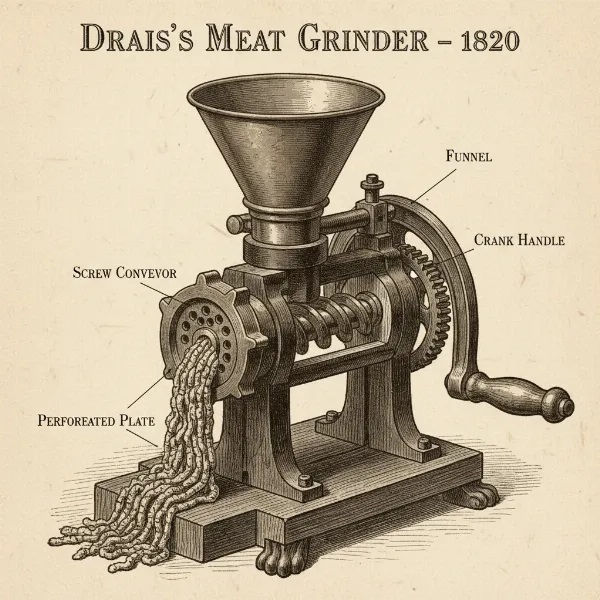
That solution arrived during the 19th century with the invention of the mechanical meat grinder, an innovative breakthrough credited to German inventor Karl Drais. As early meat grinding machines became increasingly widespread throughout butcher shops and home kitchens during the late 1800s, the traditional hand-pounded texture of Hamburg steak gradually gave way to machine-ground “hamburger” meat. This technological advancement transformed minced meat dishes forever, allowing them to be prepared more efficiently, consistently, and on a much larger scale than ever before.
At the onset of the 20th century, the hamburger steak evolved into the now-iconic sandwich that would take the United States by storm and eventually become one of the most recognizable foods in American culture.
The growing ability to mass-produce ground meat dishes would later help pave the way for the frozen convenience food industry of the 1950s, where Salisbury steak became one of the defining entrées of the classic TV dinner era.
What About Swiss Steak?
Swiss steak joined hamburger steak and Salisbury steak as typical family dinner fare in American homes in the mid-1900s.

Swiss steak is a top round or rump cut of beef that is tenderized by a method referred to as swissing (it's not from Switzerland). Rather than being fed through a grinder à la Salisbury steak, or pounded into submission Hamburg-style, swissing requires putting this rough cut of steak through a machine equipped with tiny blades which break up the connective tissues responsible for the toughness of the meat.
Hamburger and Salisbury steaks are fried or broiled and usually served with beef-based onion or mushroom gravy. Swiss steak is browned in oil and then braised or baked in a stew of tomatoes and onions in a crock pot or Dutch oven.
Food Became First Political And Then Frozen
The Salisbury steak nourished Americans throughout challenging times in the nation's history.
During World War I, as the Americans renamed frankfurters "hot dogs", the hamburger steak morphed into its patriotic cousin Salisbury steak.

In the post-war era, the first frozen dinners in compartmentalized trays of meat, potatoes, vegetables, and a dessert were first marketed as airplane food.
In 1954, Swanson coined the term "TV dinner" for frozen dinners, inspired by the booming number of televisions in American homes. 1950s was also the era when American women joined the workforce by the millions, which meant fewer women were preparing meals for the family.
With the rise of TV dinners — sold 10 million units in its first year — Salisbury steak's role changed, becoming the most popular choice besides southern-fried chicken steak and turkey. Today, Salisbury steak remains a popular choice for frozen TV dinners, but due to being so closely associated with the freezer aisle, it's lost its relevance as a homemade dinner.
Other Versions Of Salisbury Steak
Germany’s Traditional Frikadelle

In Germany, seasoned and pan-fried minced beef patties known as frikadelle remain a beloved part of the country’s culinary heritage and are widely considered one of the ancestors of the modern hamburger steak. These savory patties are traditionally prepared from ground beef — often blended with onions, herbs, spices, egg, and soaked bread — then pan-fried until beautifully browned and flavorful.
Unlike the heavily sauced Salisbury steak popularized in America, frikadelle is typically served more simply, allowing the rich flavor of the seasoned meat to take center stage. Found throughout German restaurants, cafeterias, beer gardens, and home kitchens, they are commonly enjoyed either hot or cold alongside potatoes, mustard, pickles, salads, or rustic breads. The enduring popularity of frikadelle preserves a centuries-old culinary tradition that predates the modern hamburger itself.
Japan’s Comfort Food Classic: Hambagu

Japan’s version of Salisbury steak is known as hambagu (derived from the word “hamburger”) and has become a beloved comfort food commonly served in Japanese homes, cafeterias, and family-style restaurants throughout the country.
Hambagu's roots trace back to the influence of Hamburg-style beef dishes introduced through European culinary traditions inspired by the minced steak dishes of Hamburg, Germany.
Traditional hambagu is prepared by blending ground beef with sautéed onions, egg, and panko breadcrumbs — creating a tender, juicy patty somewhat reminiscent of a refined meatloaf. The steak is typically finished with a rich mushroom gravy, demi-glace, or savory brown sauce and served alongside mashed potatoes, vegetables, greens, or rice. Over time, hambagu evolved into one of Japan’s most iconic examples of yōshoku — Western-inspired Japanese comfort cuisine.
Korea’s Beloved Hambak Steak

Korea’s version of Salisbury steak is known as hambak steak (also derived from the word “hamburger”), a comforting fusion dish influenced by both Western and Japanese culinary traditions. Much like Japan’s hambagu, Korean hambak steak features seasoned ground beef patties often smothered in a rich brown gravy or demi-glace-style sauce.
The primary distinction lies in its traditional accompaniments. Korean hambak steak is commonly served with steamed rice alongside comforting side dishes such as potato salad, kimchi, miso soup, or boiled eggs, creating a hearty cafeteria-style meal beloved in Korea for generations. The combination of savory meat, rich sauce, rice, and balanced side dishes reflects Korea’s unique adaptation of Western-style comfort food into its own deeply satisfying culinary tradition.
Chef Janine’s keto Salisbury steak is more than a nostalgic comfort meal — it is a celebration of culinary history reimagined for modern metabolic living.
From its fascinating origins as a Civil War-era therapeutic dish to its rise as an iconic American dinner classic, Salisbury steak has endured for generations because of its deeply satisfying, home-style appeal. Chef Janine honors that tradition with premium ingredients, rich mushroom gravy made in house from scratch, and thoughtful keto craftsmanship, creating a hearty, soul-warming dish that delivers timeless comfort without the carb-heavy compromise.
Visit www.comfortketo.com to check when this featured dish returns to the menu.
Bon Appétit!
Chef Janine


Comments