

The Stem Cell Secret in Your Chocolate: How Cacao Supports Healing and Longevity

Updated: Jun 29
In this article, we'll explore the fascinating connection between cacao and the body's natural repair system. Emerging research suggests that compounds found in cacao may help mobilize stem cells from the bone marrow, allowing them to enter the bloodstream and travel to areas of the body where repair and regeneration are needed.
This natural process may support tissue repair, recovery, and healthy aging by helping the body preserve its ability to maintain and renew itself over time.
Before exploring cacao's potential role in stem cell mobilization, let's first examine what stem cells are, how they function, and why they play such a vital role in maintaining health and slowing the aging process.
What Are Stem Cells?
Stem cells are the body's raw materials—the foundational cells from which all specialized cells are created. They possess two remarkable abilities: they can continuously replicate themselves and, when needed, transform into the many specialized cell types that make up the tissues and organs of the human body.
Human life begins as a single fertilized egg—a single unspecialized cell. As this cell divides, it produces identical stem cells that gradually differentiate into the specialized cells required to form every tissue, organ, and body system.
Embryonic stem cells are obtained from embryos approximately three to five days after fertilization. At this stage, the embryo is known as a blastocyst, a microscopic structure containing about 150 cells. These cells are considered pluripotent, meaning they have the ability to develop into virtually any cell type in the body.
Although embryonic stem cells disappear as development progresses, stem cells remain an essential part of our biology throughout life. Millions of adult stem cells reside throughout the body, with many stored in the bone marrow, where they serve as a lifelong reserve.
According to research published in the journal Nature, the human body:
Contains approximately 37.2 trillion cells
Maintains an estimated 50,000 to 200,000 active adult stem cells at any given time
Relies on these stem cells to continually replace damaged, worn-out, and aging cells throughout life
These extraordinary cells can differentiate into more than 220 specialized cell types, including nerve cells, heart muscle cells, liver cells, blood cells, skin cells, and bone cells. Their ability to regenerate tissues and replace damaged cells makes stem cells one of the body's most powerful mechanisms for healing, maintenance, and healthy aging.
How Stem Cells Divide
When a stem cell divides, the two daughter cells can follow one of three paths:
Both remain stem cells, expanding or maintaining the body's reservoir of regenerative cells.
One remains a stem cell while the other differentiates, preserving the stem cell pool while producing a specialized cell.
Both differentiate into specialized cells, contributing directly to tissue growth, maintenance, and repair.

Scientists still do not fully understand what determines which of these three outcomes occurs or how the body maintains the proper balance of stem cells within each tissue throughout life.
Through this process of differentiation, stem cells can become more than 220 specialized cell types, including:
Blood cells
Brain and nerve cells
Heart muscle cells
Liver cells
Bone cells
Skin cells
And many other specialized cells found throughout the body
What makes stem cells truly remarkable is their ability to both self-renew and differentiate. No other cells in the human body possess this unique combination of capabilities. This extraordinary regenerative potential makes stem cells indispensable for growth, tissue maintenance, injury repair, and healthy aging.
Why Stem Cells Matter
From before birth until the end of life, stem cells quietly maintain and repair virtually every organ in the body. They replace worn-out cells, help heal injuries, rebuild damaged tissues, and continually renew many of the cells we depend on every day—including those that make up our blood, immune system, skin, and digestive tract.
Scientists continue to study stem cells because of their extraordinary potential to repair damaged tissues, replace aging cells, and support the body's natural healing and regenerative processes.
However, there is one important limitation. Although adult stem cells can self-renew, their numbers and regenerative capacity gradually decline with age. As this decline continues, the body's ability to repair and regenerate tissues also begins to diminish.
This gradual loss of regenerative capacity is considered one of the fundamental biological processes that contributes to aging.

Understanding why stem cells decline—and whether certain lifestyle factors or foods can help support their function—has become one of the most active and promising areas of modern medical research.
The Aging of Stem Cells
Like every other cell in the body, stem cells age over time. As we grow older, the stem cells stored primarily in the bone marrow gradually lose some of their ability to divide, self-renew, and differentiate into specialized cell types. As a result, the body's capacity to repair damaged tissues and maintain healthy organs slowly declines.
When an injury occurs—whether it's a cut to the skin, a broken bone, or damage to an internal organ—chemical signals released by the injured tissue help recruit stem cells from the bone marrow and surrounding tissues. These cells travel to the site of injury, where they participate in tissue repair and regeneration. However, this regenerative response becomes less efficient with age.
Why Stem Cells Decline with Age
Scientists believe several factors contribute to the gradual decline in stem cell number and function.
1. Environmental Stress
Throughout life, stem cells are exposed to both internal and external stressors that gradually reduce their effectiveness. These include:
Pollution and environmental toxins
Ultraviolet and ionizing radiation
Poor nutrition
Chronic psychological stress
Hormonal and metabolic disorders
Chronic inflammation and disease
Smoking, excessive alcohol consumption, and substance abuse
The greater the cumulative damage to the body, the greater the demand placed on its repair systems.
2. The Natural Aging Process
Even under ideal conditions, stem cells undergo biological aging. Over time they accumulate DNA damage, experience shortening of their protective telomeres, and become less efficient at repairing themselves.
This helps explain why younger people generally recover more quickly from injuries than older adults. As stem cell function declines, tissues repair more slowly, muscles recover less efficiently, bones heal more slowly, and many of the visible and functional signs of aging gradually appear.
3. Lifetime Demand for Repair
Every injury, illness, infection, surgery, or period of intense physical stress requires stem cells to participate in tissue repair. Over decades, this continual demand may contribute to a gradual decline in the regenerative capacity of many stem cell populations.
Elite athletes, individuals with physically demanding occupations, and people who experience repeated injuries often place exceptionally high demands on their repair systems, although many other factors—including genetics, nutrition, sleep, and overall health—also influence recovery.
4. Genetics
Genetics also plays an important role in stem cell function and longevity. Some individuals naturally maintain healthier stem cell populations for longer periods, while others experience a faster decline in regenerative capacity.
Although genetics cannot be changed, lifestyle choices can influence how well stem cells function throughout life. Regular exercise, quality sleep, good nutrition, maintaining a healthy weight, avoiding smoking, and managing chronic disease all help create an environment that supports the body's natural repair mechanisms.
While aging cannot be stopped, understanding the factors that influence stem cell health may help preserve the body's regenerative capacity and promote healthier aging.
What Are Polyphenols?
Polyphenols are naturally occurring plant compounds found in a wide variety of foods, including:
Fruits
Vegetables
Herbs
Spices
Tea
Cocoa and dark chocolate
Red wine
Plants produce polyphenols to protect themselves from ultraviolet radiation, environmental stress, insects, and disease. When we consume polyphenol-rich foods, many of these same compounds provide important health benefits.
Polyphenols are best known for their powerful antioxidant and anti-inflammatory properties. They help neutralize harmful free radicals, reduce oxidative stress, and support the body's natural defense systems. By helping to control chronic inflammation—a major contributor to aging and the decline of stem cell function—polyphenols are increasingly recognized as an important part of a healthy diet.
Raw cacao and dark chocolate are among the richest natural sources of polyphenols. These bioactive compounds help neutralize free radicals, reducing oxidative stress and protecting cells from damage. As a result, diets rich in polyphenols have been associated with a lower risk of chronic diseases, including cardiovascular disease, type 2 diabetes, and certain cancers.
By helping to reduce oxidative stress and chronic inflammation, polyphenols may also lessen the body's ongoing need for tissue repair, potentially reducing the burden placed on stem cells over time. In addition to its polyphenol content, cacao is an excellent source of magnesium, an essential mineral involved in hundreds of cellular processes, including energy production, muscle function, and DNA repair.
The Four Main Classes of Polyphenols
Flavonoids (≈60% of all polyphenols)
Include compounds such as catechins, quercetin, kaempferol, and anthocyanins.
Common sources: Cacao, apples, onions, berries, red cabbage, tea, and citrus fruits.
Phenolic Acids (≈30% of all polyphenols)
A diverse group of compounds found in many plant foods.
Common sources: Fruits, vegetables, whole grains, coffee, and seeds.
Polyphenolic Amides
A smaller class of polyphenols known for their anti-inflammatory properties.
Common sources: Chili peppers (capsaicinoids) and oats (avenanthramides).
Other Polyphenols
This category includes several unique groups, such as stilbenes and lignans.
Common sources: Red wine, grapes, flaxseeds, sesame seeds, turmeric, berries, and whole grains.

Cacao Flavanols: A Unique Class of Plant Compounds
Among the many flavonoids found in nature, a subgroup known as flavanols has attracted considerable scientific interest. Cacao is one of the richest natural sources of these compounds, particularly epicatechin, catechin, and procyanidins, which have been extensively studied for their beneficial effects on cardiovascular health, brain function, blood vessel function, and cellular health.
Researchers are also investigating whether cacao flavanols may support the body's natural repair mechanisms, including the mobilization of stem cells.
Cacao vs. Cocoa: What's the Difference?
You've probably noticed that some chocolate products are labeled cacao, while others are labeled cocoa. Although the terms are often used interchangeably, they generally refer to different stages of processing.
Cacao usually refers to products made from raw or minimally processed cacao seeds (commonly called cacao beans).
Cocoa generally refers to cacao that has been roasted and processed into products such as cocoa powder. Some cocoa powders are further treated with an alkalizing process, known as Dutch processing, to reduce bitterness and produce a darker color.
From a nutritional standpoint, the most important consideration isn't whether the label says cacao or cocoa—it's how much of the naturally occurring flavanols remain after processing. Fermentation, roasting, and especially Dutch processing can substantially reduce flavanol content.
Whenever possible, choose products that are minimally processed and contain few ingredients. Products with little or no added sugar generally offer the greatest nutritional value.
Choose Dark Chocolate Wisely
Dark chocolate containing 80% cacao or more is among the richest dietary sources of cacao flavanols. In addition to these beneficial plant compounds, cacao naturally provides fiber, magnesium, iron, copper, manganese, and several other essential minerals.
However, not all dark chocolate delivers the same health benefits. The amount of flavanols remaining in the finished product depends largely on how the cacao was processed before it reached the wrapper.
When choosing dark chocolate, look for products that:
Contain 80% cacao or higher
Are minimally processed
Are not Dutch processed (unless flavanol content is specified)
Contain little or no added sugar
Clearly state they are high in cacao flavanols, when available
By choosing high-quality dark chocolate, you can maximize your intake of beneficial flavanols while minimizing unnecessary added ingredients.
How Do Cacao Flavanols Help Mobilize Stem Cells?
For many years, scientists believed the health benefits of cacao were largely due to its antioxidant properties. More recent research, however, suggests that cacao flavanols may influence the body in a much more dynamic way.
Studies indicate that cacao flavanols can stimulate the production of nitric oxide (NO), a signaling molecule produced by the endothelial cells that line our blood vessels. Nitric oxide helps relax blood vessels, improves circulation, and plays an important role in cellular communication throughout the body.
Researchers have discovered that nitric oxide also appears to participate in the release—or mobilization—of adult stem cells from the bone marrow into the bloodstream.
Once circulating, these stem cells can migrate to tissues that have been injured or are undergoing repair, where they contribute to the body's natural regenerative processes.
Although scientists are still working to fully understand the mechanisms involved, the evidence suggests that cacao flavanols may support tissue repair in two complementary ways:
By increasing nitric oxide production, improving blood flow and cellular signaling.
By promoting the mobilization of circulating stem cells, allowing more regenerative cells to reach tissues where they are needed.
This combination has made cacao flavanols one of the most extensively studied dietary compounds in the field of cardiovascular health and regenerative medicine.
In the next section, we'll examine the clinical studies that measured changes in circulating stem cells after the consumption of high-flavanol cacao and explore what those findings may mean for healthy aging.
Why Healthy Endothelial Cells Matter
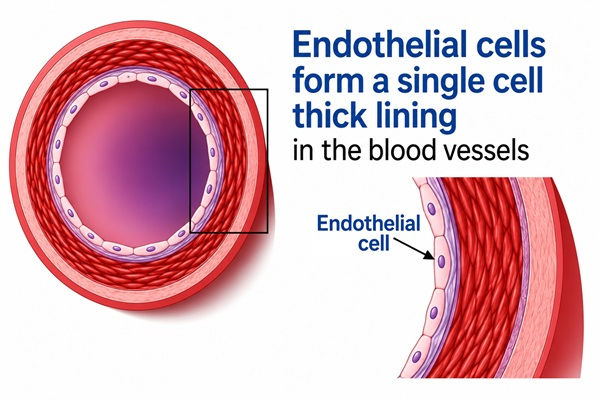
To understand why cacao flavanols produce these effects, it's important to first understand the role of the endothelium—the thin layer of cells that lines every blood vessel in the body.
The endothelium is a single-cell-thick layer of endothelial cells lining the inside of every blood vessel. Although only one cell thick, it is one of the body's most important organs.
Healthy endothelial cells:
Regulate blood flow by relaxing and constricting blood vessels
Control the movement of nutrients, oxygen, fluids, and immune cells into surrounding tissues
Produce nitric oxide, a molecule essential for healthy circulation
Help regulate blood clotting and inflammation
Support tissue repair and healing throughout the body
When endothelial function declines, circulation becomes less efficient and the body's ability to deliver oxygen, nutrients, and regenerative cells to damaged tissues also declines.
The importance of endothelial health became especially clear in a landmark clinical study that examined the effects of high-flavanol cocoa on both endothelial function and stem cell mobilization.
Dark Chocolate and Stem Cell Mobilization
Dark chocolate is one of the richest dietary sources of cacao flavanols, making it one of the most extensively studied foods for supporting cardiovascular health and the body's natural repair processes.
A landmark study conducted by researchers at the University of California, San Francisco (UCSF) investigated whether consuming a cocoa beverage rich in flavanols could influence stem cell activity and blood vessel function in adults with coronary artery disease.
Participants consumed either a high-flavanol cocoa beverage (750 mg of flavanols per day) or a similar beverage containing very low levels of flavanols for 30 days.
The results were striking.
Compared with the low-flavanol group, participants consuming the high-flavanol beverage demonstrated:
Nearly twice as many circulating stem cells in their bloodstream.
A 47% improvement in endothelial function, measured by flow-mediated dilation (FMD), an indicator of how well arteries expand in response to increased blood flow.
These findings suggest that cacao flavanols may help stimulate the release of adult stem cells from the bone marrow while simultaneously improving the health and function of the blood vessels responsible for transporting them throughout the body.
Food as Regenerative Medicine
One of the strongest advocates for the health benefits of cacao is William W. Li, MD, physician, scientist, and author of Eat to Beat Disease.
Dr. Li highlights the UCSF research as evidence that consuming flavanol-rich cacao may significantly increase the number of circulating stem cells available to participate in tissue repair. He often recommends two cups of high-flavanol hot cocoa as an effective way to obtain the flavanols used in many of the clinical studies, while emphasizing that the product should be rich in cacao flavanols and contain little or no added sugar.
As Dr. Li explains in Eat to Beat Disease:
"Your immune cells are regenerated every seven days, so if your stem cells disappeared, you'd likely die of an infection soon after."
This statement by Dr. Li underscores the essential role stem cells play in continually renewing the body's tissues—including the immune system—and why preserving their function has become an important focus of longevity and regenerative medicine.
In the video interview below, Dr. Li explains how certain foods—including cacao—may help support the body's natural stem cell response. To hear his discussion on stem cell–recruiting foods, proceed to approximately the 13-minute mark.
Learn More: Choosing the Right Dark Chocolate
If you'd like to explore this topic in greater detail, the following video examines why not all dark chocolate provides the same health benefits. Although many products advertise a high cacao percentage, research shows that the amount of epicatechin—one of cacao's most important flavanols—can vary dramatically depending on how the chocolate is processed.
The next video explains how fermentation, roasting, and Dutch processing can significantly reduce flavanol content, why nitric oxide production is essential for healthy blood vessels and stem cell mobilization, and how epicatechin may support mitochondrial function and the stem cell niche. It also discusses the research behind high-flavanol cacao, the doses used in clinical studies, and why choosing minimally processed, flavanol-rich cacao products is more important than simply looking at the percentage of cacao listed on the label.
The presentation concludes with practical guidance on selecting dark chocolate that retains the greatest amount of these beneficial plant compounds and reviews several peer-reviewed studies supporting the role of cacao flavanols in cardiovascular health, healthy aging, and stem cell biology.
In Conclusion
While no single food can stop the aging process, the growing body of research suggests that high-flavanol cacao may support several of the body's natural repair mechanisms—including endothelial function, nitric oxide production, and stem cell mobilization.
Choosing minimally processed, high-flavanol dark chocolate is a simple and enjoyable way to incorporate these remarkable plant compounds into a healthy lifestyle.


Comments