

🤸♀️ Stretch, Strengthen, Sustain: The Daily Ritual That Keeps Muscles Thriving as You Age

Updated: Jun 3
The Secret Language of Movement
If you took the time to document every physical action you perform in a single day—from the obvious, like walking to the kitchen, to the invisible, like your lungs rhythmically pulling in oxygen and your heart quietly pulsing blood—you’d have a never-ending list. Our bodies are in constant motion, even in sleep. Yet, we rarely stop to consider the foundational role our muscles play in every single one of these actions.
Now, pause. How did you begin your day? Did you stretch the moment you climbed out of bed? Or did you bolt upright and stumble to the coffee maker without a thought to your body?
The Cat Knows Best
Watch your cat. Without fail, the moment it rises from slumber, it stretches—gracefully and deliberately. Back arched. Limbs extended. Muscles elongated. It's an ancient wisdom written into their DNA, one that too many of us have forgotten. Stretching is more than a feel-good ritual—it primes muscles, lubricates joints, improves circulation, and resets posture. It's the first step in maintaining the mobility and strength that preserve independence.

Understanding Muscle Loss: The Quiet Threat
🦴 What Is Sarcopenia?
Sarcopenia is the age-related loss of muscle mass, strength, and function. It often begins after age 30 and gradually accelerates with age. Left unchecked, sarcopenia can lead to weakness, poor balance, increased risk of falls, reduced independence, and a lower quality of life.
💡 The good news: Sarcopenia is not an inevitable part of aging. Regular resistance training, adequate protein intake, regular stretching, daily movement, and healthy lifestyle habits can help preserve—and even rebuild—muscle at any age. 💪✨
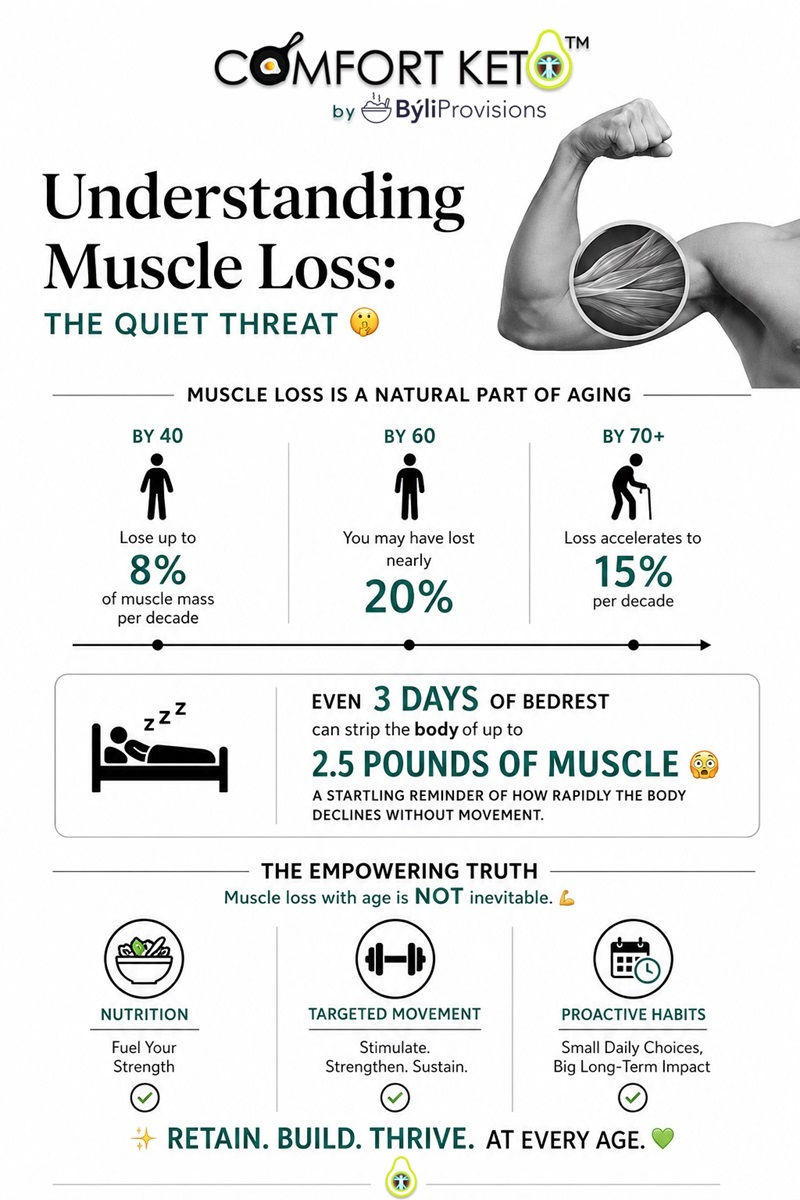
Here's the empowering truth: muscle loss with age is not inevitable. Through nutrition, targeted movement, and proactive daily habits, you can retain—and even grow—muscle throughout your golden years.
Muscle Matters: More Than Just Strength
Muscles don’t just help you lift weights—they power every functional movement in your day, support your bones, regulate blood sugar, and even bolster immune health.
Research from UCLA published in The American Journal of Medicine showed that higher muscle mass is strongly associated with lower mortality in older adults—far more so than BMI, which doesn’t distinguish between fat and muscle.
In short: your muscles are not just for vanity or fitness—they are critical for longevity.
The Nutritional Blueprint for Muscle Longevity
1. Prioritize Protein
Protein is your body's raw material for repair and growth. As we age, we become less efficient at processing protein, which is why older adults need more protein—not less.
How much? Up to 1.2–2.0 grams of protein per kilogram of body weight daily for older adults, nearly double the RDA for younger people.
When to eat it? You increase your body’s tissue-building rate by eating protein-rich foods right after exercising.

2. Choose Complete Proteins
Not all protein is created equal. Animal proteins—like eggs, chicken, fish, and dairy—are complete, containing all nine essential amino acids. Most plant proteins (except soy and quinoa) are incomplete, missing one or more.
If you follow a plant-based diet, combine sources—like rice and beans or lentils and nuts—to ensure you're getting a full amino acid profile.
The Amino Acid Content Differ Between Animal Proteins and Plant-Based Proteins
Proteins are made up of amino acids. The human body needs about 20 different amino acids to build proteins.
Your body can make some amino acids itself, but you have to get nine of them — known as essential amino acids — through your diet.
Protein sources vary greatly in terms of the amino acids they contain. Generally, animal proteins are known as complete proteins, meaning they contain all nine essential amino acids you need. Plant foods are considered incomplete proteins, as they contain protein, but lack several of the essential amino acids.
3. Targeted Nutrients That Matter
Vitamin D: Crucial for muscle function and bone strength. Low levels are linked to falls and frailty.
Magnesium: Supports muscle contraction and prevents cramping and fatigue.
Zinc: Aids in testosterone production and muscle recovery.
HMB (β-Hydroxy β-Methylbutyrate): A metabolite of leucine, this compound can prevent muscle breakdown, especially in older adults.
Omega-3 Fatty Acids: Reduce inflammation and may increase muscle protein synthesis in response to protein intake.
Sample High-Protein, Muscle-Friendly Foods:

Daily Muscle Maintenance Rituals: Beyond the Kitchen
Nutrition is critical—but movement is what activates and maintains muscle strength. Here’s how to support your muscle health daily:
1. Stretching: The Morning Wake-Up Call
When? First thing in the morning and before bed.
What to do? Gentle stretches like a standing forward bend, cat-cow stretch, or lying spinal twist.

2. Resistance Training: The Muscle Stimulator
How often? 2–3 times per week.
Options: Bodyweight exercises (push-ups, squats), resistance bands, or light dumbbells.
Focus on: Large muscle groups—legs, glutes, core, chest, and back.

3. Walking & Low-Impact Cardio
Aim for: 7,000–10,000 steps per day or 30 minutes of brisk walking.
Why? Cardiovascular health supports circulation to your muscles, and walking maintains leg strength and endurance.
4. Eccentric Training (The Secret Weapon)
This involves slowing down the lowering phase of movements—like descending into a squat or slowly lowering a bicep curl.

5. Balance and Stability Work
Yoga, tai chi, or simple single-leg stands can drastically reduce fall risk, enhance coordination, and keep you agile.
Final Thought: A Stronger Future Starts Today
There’s a quiet revolution happening—one where aging adults are redefining what it means to grow older. Muscle loss may be common, but it’s not destiny. By stretching each morning like your feline friend, nourishing your body with the right foods, and incorporating strategic movement into your daily routine, you can age not only with strength, but with grace, independence, and vitality.
So, let your morning ritual be a stretch. And eat right; let your meals be your medicine. You will sure have really good health down the road.


Comments