

Which Cheeses Are Best for Ketogenic Diet?

Updated: Jun 29
Cheese is a staple on the ketogenic diet. Although milk, the source for cheese production, is relatively high in carbs (lactose), the fermentation process reduces the amount of carbohydrates in the milk significantly.
Lactose is a naturally occurring sugar found in milk and other dairy products. The body does not treat lactose as a dangerous substance. The issue is that some people do not produce sufficient amounts of the enzyme lactase needed to digest it. As a result, dairy foods high in lactose may cause digestive discomfort. This condition is misleadingly called lactose intolerance because the term directs attention toward lactose, when the actual problem is insufficient lactase production. There is no intolerance to lactose taking place. Rather, lactose is simply not being fully digested. Lactase enzyme supplements will help improve lactose digestion. Aged cheeses naturally contain very little lactose and are often well tolerated.
Read more on the topic of lactose intolerance: Lactose: The Sugar Found in Milk
In addition, cheeses are packed with healthy fats and protein, and are rich in vitamin A, B12, zinc, sodium, and calcium. Cheeses are also rich in MCTs (medium-chain triglycerides), which are especially beneficial on a ketogenic diet.
Most cheeses fit in perfectly with the ketogenic diet’s macro nutrient ratios.
But, how many carbs are in different cheeses?
And which ones are the most keto-friendly cheeses?

Cheeses with Lowest Carb Content
Foods containing less than 1 gram of carbohydrates per serving are considered to be very low in carbs. Fresh cheeses contain a significant portion of the carbohydrates in milk, and are less fitting for ketogenic diet.
During the aging process, the bacteria found in the milk ferment the carbohydrates. Typically, longer aged cheeses and the cheeses that are high in protein contain less carbohydrate.
The cheeses with the lowest amount of carbs (from least to most) include:
Munster
Camembert
Brie
Provolone cheese
Cheddar cheese
Gouda
Blue cheese
Parmesan cheese
Swiss cheese

Based on the carbs per ounce of various cheeses, you should reach for brie, blue cheese, Gouda, and Munster when choosing a keto-friendly cheese. Swiss, Manchego, goat, feta, and cream cheese are higher in carbs; however, they only have around 1-2g of total carbs per serving so they should be able to fit into your keto diet.
Typical carbohydrate content per 1-ounce serving of cheeses commonly used in Comfort Keto recipes:
Brie cheese: 0.1g net carbs
Blue cheese: 0.5g net carbs
Cheddar cheese: 0.5g net carbs
Parmesan cheese: 0.9g net carbs
Mozzarella cheese: 1.0g net carbs
Cheeses with Relatively Higher Carb Content
First things first: Avoid all cheese spreads due to the high carb content and undesirable additives.
Cream cheese, cottage cheese and ricotta cheese contain less than 3 grams of protein per ounce (less than half of what is found in most aged cheeses) and contain about 1 gram of carbohydrate per ounce. Yet, the consumption amount of these cheeses must be carefully monitored. For example, 1 cup of cottage cheese contains 14 grams of protein, and 10 grams of carbohydrates.
Cheeses with Highest Protein Content
Typically, the cheeses with low moisture content contain more protein.
Parmesan cheese has the highest protein content of all all cheeses, with 10 grams of protein per ounce.
Most other cheeses such as cheddar, Brie, Gouda, blue cheese or mozzarella contain 6 to 7 grams of protein per ounce.
Comfort Keto Recipes Typically Use High-Protein Low-Carb Cheeses
Cheese is a good food to add to your diet to increase your protein intake without affecting your carb intake.
For example, Chef Janine melts a slice or two of cheddar cheese over our casseroles, Mexican dishes and quiches.
She serves her salads with a blue cheese dressing and occasionally with grated cheese.
She adds grated Parmesan cheese to her mashed cauliflower for a tasty high-protein low-carb substitute for mashed potatoes.
Chef Janine also sprinkles Parmesan cheese over steamed broccoli, or add mozzarella cheese to her omelets.
Aged Hard Cheeses: Rich in Cultures, Healthy Fats & Flavor
The traditional aged cheeses of Italy, France, England, Switzerland, and parts of Northern Europe have long been valued not only for their rich flavor, but also for their nutritional density. These cheeses are typically fermented and aged for extended periods, allowing naturally occurring cultures and beneficial bacteria to flourish while dramatically reducing lactose content.
As cheeses age and dry, they generally become lower in carbohydrates, higher in protein, and more concentrated in healthy fats. Many traditional hard cheeses also contain naturally occurring probiotics and postbiotic compounds produced during fermentation, making them especially supportive of gut health and digestion.
For ketogenic diets, these aged cheeses are among the most ideal dairy foods due to their high fat content, low carbohydrate levels, satisfying flavor, and excellent nutrient profile.

Why Aged Hard Cheeses Are Preferred on Keto
Lower lactose content due to extended fermentation
Higher concentration of beneficial cultures and fermentation compounds
Rich source of healthy fats for ketosis support
Dense in protein while remaining very low in carbohydrates
Excellent source of calcium, vitamin A, vitamin B12, zinc, and phosphorus
Naturally satisfying and flavorful, helping reduce cravings and overeating
Long shelf life and highly versatile in ketogenic cooking
Traditional Aged Hard Cheeses Ideal for Ketogenic Diets
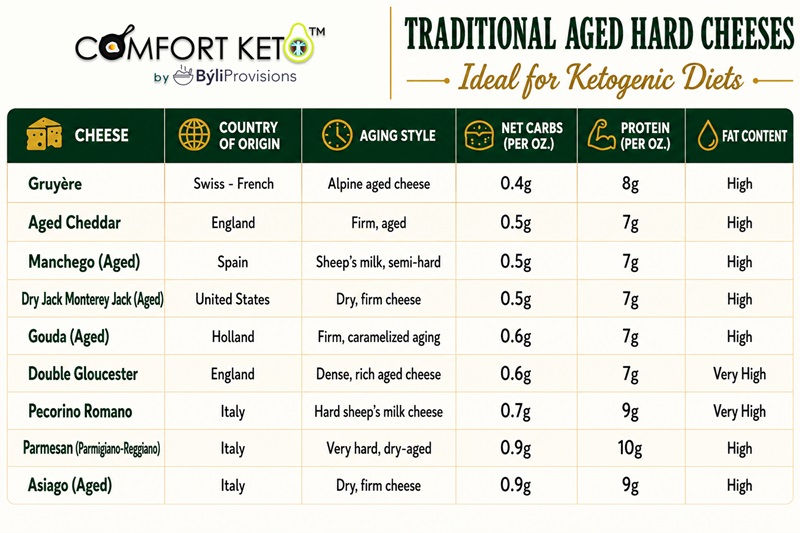
Chef Janine frequently incorporates aged cheeses into Comfort Keto recipes because they add richness, depth of flavor, protein, and healthy fats without significantly increasing carbohydrate intake.
Grated Parmesan, aged cheddar, Gouda, Gruyère, and Pecorino Romano are especially useful in casseroles, omelets, cauliflower dishes, sauces, salads, pizza quiches, and baked keto entrées.
Visit www.comfortketo.com regularly to see which menu items are currently featuring these cheeses.
Bon Appétit!
Chef Janine.


Comments