

The Hidden Risks Behind GLP-1 Weight Loss Drugs — Ozempic, Wegovy

Why Rapid Weight Loss May Come at a Much Higher Cost
Drugs like Ozempic, Wegovy, and similar GLP-1 medications have exploded in popularity across the world. They are promoted as revolutionary tools for rapid weight loss, appetite control, and “metabolic health.” Social media influencers, celebrities, and even casual conversations now treat these drugs as if they are simple lifestyle aids.
But behind the hype lies a much more serious reality.
These are not harmless wellness products. They are powerful metabolic drugs that significantly alter how the body functions.
GLP-1 medications work by:
suppressing appetite,
slowing digestion,
changing stomach emptying,
altering insulin and blood sugar response,
and affecting brain pathways connected to hunger and cravings.
That is not a minor adjustment. It is a major physiological intervention.
Can a Desert Survival Mechanism Truly Support Human Health?

GLP-1 medications are based on a hormone-like substance originally discovered through research connected to the saliva of the Gila monster. This unusual reptile lives primarily in the hot desert regions of the Southwestern United States and Northern Mexico, especially in areas of Arizona, New Mexico, parts of Nevada, Utah, and Northern Mexico.
Gila monsters prefer dry scrublands, rocky desert terrain, and cactus-filled environments where they spend much of their time hidden underground or in shaded burrows escaping the intense desert heat. Most adults grow to about 18–24 inches long and can weigh between 3–5 pounds, with thick bodies, bead-like scales, and black-and-orange patterned skin that gives them an almost prehistoric appearance.
Scientists found that this reptile produces hormone-like compounds that help slow digestion and regulate blood sugar for extremely long periods of time. That makes sense for a cold-blooded desert animal that may only eat a few large meals each year and then remain mostly inactive while surviving on stored energy.
The human body, however, was never designed to function like a reptile living in survival mode.
Humans require regular nourishment to support brain activity, muscle maintenance, hormones, immune function, circulation, digestion, and healthy metabolism.
While appetite-control medications may help some people temporarily reduce overeating, the human body still depends on adequate nutrition, protein, minerals, sunlight, movement, hydration, and metabolic balance to truly thrive. A lizard surviving months between meals in the desert is very different from a human being trying to maintain long-term strength, vitality, energy, and overall health.
A Growing Number of Serious Concerns
As the popularity of these drugs has increased, so have reports of serious side effects and legal action. Thousands of lawsuits have now been filed involving GLP-1 medications, with many users alleging severe digestive complications and other health problems.

Some of the reported side effects include:
chronic nausea,
vomiting,
severe bloating,
digestive dysfunction,
bowel obstruction,
gallbladder problems,
pancreatitis,
dehydration,
and possible long-term stomach paralysis-like conditions.
While not every user experiences these complications, the sheer number of reports should raise concern for anyone considering these drugs casually for weight loss.
The Muscle Loss Nobody Talks About
One of the most overlooked dangers may be the rapid loss of muscle mass.
Many people celebrate seeing the number on the scale drop quickly, but what is often ignored is that significant amounts of lean muscle can also be lost during rapid weight reduction.
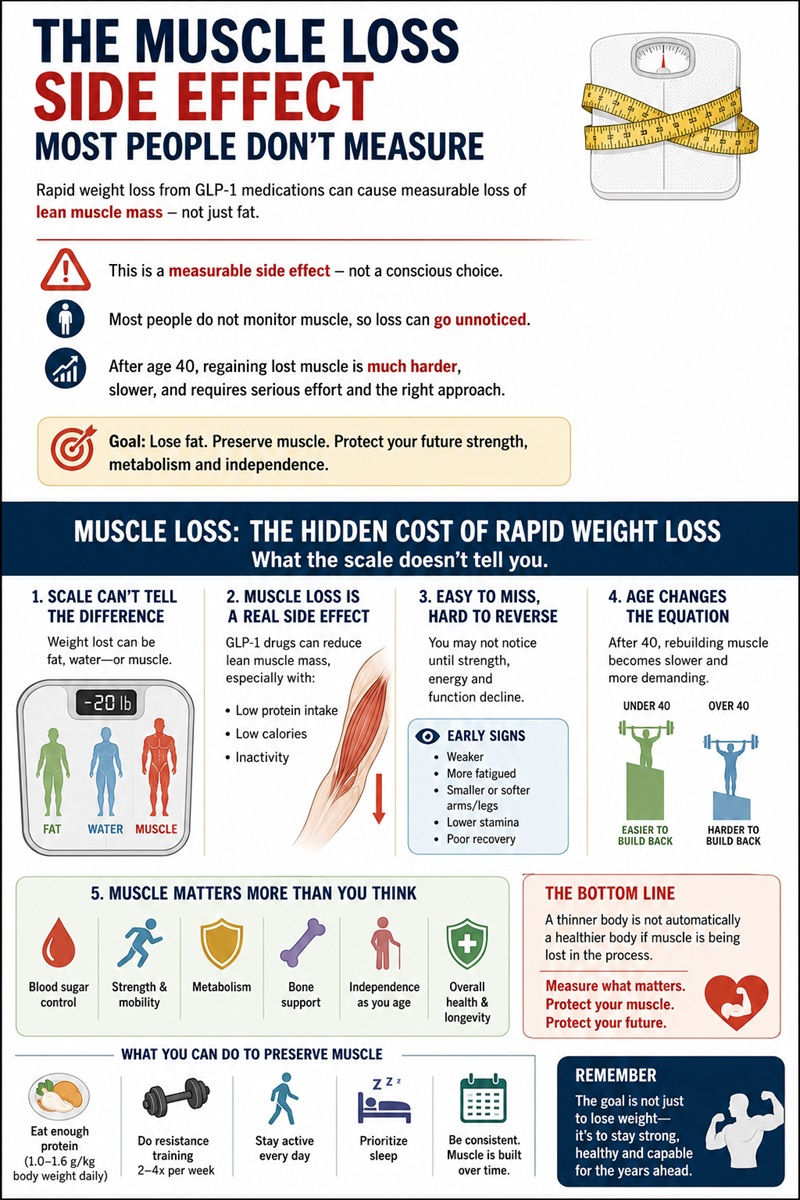
Muscle is not “extra weight.” Muscle is:
metabolic protection,
strength,
stability,
healthy aging,
and long-term resilience.
A thinner body does not automatically mean a healthier body.
Many users on GLP-1 drugs end up eating dramatically less food overall, which may also reduce:
protein intake,
vitamin intake,
hydration,
and overall nutritional quality.
Over time, this can potentially contribute to:
fatigue,
weakness,
nutritional deficiencies,
hormonal imbalance,
and metabolic slowdown.
Weight Loss Without Real Healing
One of the biggest concerns surrounding GLP-1 weight loss drugs is that they function as long-term appetite suppression systems that often require continued use to maintain results.
For many users, once the medication is stopped:
hunger returns aggressively,
cravings intensify,
appetite rebounds,
and weight regain follows rapidly.
This is because the deeper causes of weight gain were never truly corrected.
Poor diet quality, ultra-processed foods, chronic sugar consumption, metabolic dysfunction, inactivity, stress, poor sleep, and unhealthy eating patterns are not healed by chemically suppressing appetite.
The drug may reduce the desire to eat, but it does not rebuild true metabolic health.
This creates what many critics see as a dangerous pharmaceutical dependency cycle:
continue taking the drug indefinitely to maintain the effect,
or
stop the drug and face powerful rebound effects that drive weight regain.
For many people, this turns weight management into a lifelong medication relationship rather than a true restoration of health.
Real metabolic healing requires:
proper nutrition,
whole foods,
stable blood sugar,
muscle-preserving activity,
movement,
healthy sleep,
and sustainable lifestyle change.
There is no shortcut around that reality.
A Dangerous Cultural Shift
Perhaps most concerning is how normalized these drugs have become.
Powerful medications that alter digestion, appetite, and body chemistry are now casually discussed as quick beauty solutions or trendy weight-loss hacks.
This should concern all of us.
Historically, medicine has repeatedly embraced heavily marketed solutions long before their full long-term consequences were understood.
We should be cautious before treating major metabolic drugs like harmless lifestyle accessories.
A Serious Warning for GLP-1 Users
Even physicians who support GLP-1 drugs warn that these medications should never be taken casually.
Dr. Kevin Joseph, an internal medicine physician who personally used GLP-1 therapy for major weight loss, recently outlined substances, medications, supplements, and habits that should not be mixed carelessly with drugs like Ozempic and Mounjaro due to the risk of serious side effects and metabolic complications.
These are powerful metabolic drugs — not harmless weight-loss shortcuts.
Our Position
At Comfort Keto, we believe lasting health is built through nourishment, metabolic restoration, real food, and sustainable lifestyle practices — not through chemically suppressing the body’s natural hunger and digestive processes for cosmetic weight loss.
The goal should not simply be to become lighter.
The goal should be to become healthier, stronger, more nourished, and more metabolically resilient.
Real health is not found in starvation disguised as modern medicine.


Comments